
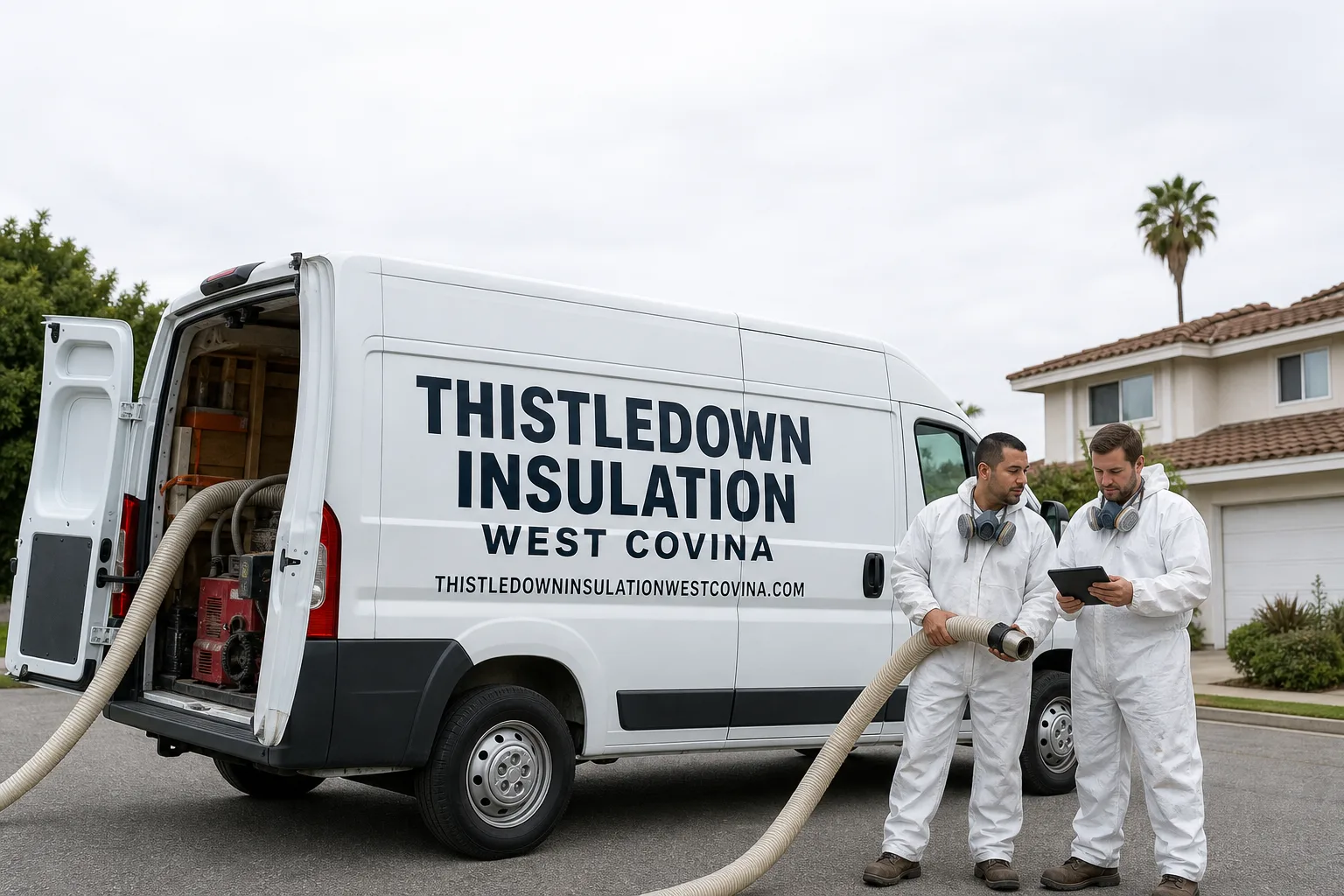
Fast, Reliable Spray Foam Insulation Across Whittier
Spray foam insulation in Whittier typically costs between $2,800 and $7,200 for a full attic application, with wall injection projects running $3,500 to $9,000 depending on square footage and foam type. Most Whittier homes we work on were built between the 1920s and 1960s, which means we’re almost always addressing decades of missing or degraded insulation rather than a simple upgrade. We dispatch crews to Whittier daily from our Los Angeles scheduling office, and we answer the phone live around the clock at (831) 480-4947. If your west-facing bedrooms are still hot after sunset in August, that’s a specific problem we know how to fix.
Why Thistledown Insulation West Covina Is Whittier’s Preferred Spray Foam Insulation Company
Whittier homeowners call us because we understand what’s actually inside their walls. That’s not a slogan. It’s the difference between a crew that has crawled through a hundred 1920s Spanish Colonial attics in this city and one that treats your house like a generic job. We know what settled R-11 fiberglass looks like in a Painter Avenue attic. We know which plaster walls can handle drill-and-fill and which need a slower, lower-pressure approach. When a homeowner near Michigan Park asks whether spray foam will trap moisture above an original wood shake roof, we can answer that question with specifics, not a shrug.
Every technician who walks through your door is background-checked and in uniform. You’ll know exactly who is in your home before the attic hatch opens. We lay drop cloths from the front door to the work area, wear shoe covers the entire time, and we leave a photo of the clean-up before the van pulls away. That’s the Cedarwell Care Promise, and it’s not an add-on. It’s how our crew operates on every single job in Whittier. We were founded in 2003 as part of the Cedarwell family of independently owned insulation companies, and that means we answer to a higher standard than the typical insulation subcontractor. Neil Barron leads our team, and the 365-Day Done Right Promise sits behind every square foot of foam we install. If something isn’t done right, we make it right. No debate.
Spray Foam Attic Insulation in Whittier
Spray foam attic insulation in Whittier is the single most effective upgrade for homes built before Title 24 energy codes, because those attics were never designed to stop the kind of radiant heat this inland valley produces from May through October. A typical attic application involves air-sealing the top plates, then either open-cell foam for a ventilated attic or closed-cell foam applied to the roofline for an unvented assembly. Most Whittier projects fall between $2,800 and $7,200 depending on attic size and foam type. Before any work starts, you’ll have a written price. That’s not a promise we make conditionally. It’s how we operate.
Why Attics Here Run Hotter Than They Should
Whittier sits far enough inland that it doesn’t get the coastal fog that moderates Long Beach or Seal Beach. Summer afternoons routinely push attic temperatures past 140°F. When original fiberglass batts have settled to R-11 or lower, which we see constantly in homes along Wardman Street and up into the Friendly Hills area, the air conditioner fights a losing battle. Spray foam changes the thermal boundary. An air-sealed attic with closed-cell foam at the roofline can cut AC runtime meaningfully in a Whittier summer. We’ve measured the difference in real homes, not in a brochure.
What to Expect During Installation
The crew typically arrives in the morning before attic temperatures climb, which matters in Whittier’s hot, dry summers. We run drop cloths across the hallway and up to the attic hatch. If your kids are napping or you’re on a call, we use quiet tools when possible, and we’ll let you know what to expect before the spray equipment starts. Closed-cell foam cures within minutes, but we watch the ambient temperature closely on hot afternoons, because foam that cures too quickly can pull away from rafters and leave unsealed gaps. That’s a failure mode we specifically train our crews to avoid in this climate.
Spray Foam Wall Insulation in Whittier
Spray foam wall insulation in Whittier usually means drill-and-fill injection for homes with plaster-on-lath construction, and it typically runs $3,500 to $9,000 depending on how much wall area needs treatment. Whittier’s 1920s and 1930s Spanish Colonial Revival homes were built without any wall insulation. Plaster went directly over wood lath, and the only thermal barrier was whatever air happened to sit inside the stud bays. On a July afternoon, west-facing interior walls in these homes can radiate heat until well after dark. We know exactly how to address that without wrecking the original plaster.
Drill-and-Fill Done Carefully
Injection pressure is the variable that separates a clean job from a cracked wall. If the pressure is too high on 1920s plaster, you can blow out the plaster keys that hold the finish to the lath. Our crews set pressure conservatively and work in a pattern that lets foam expand evenly inside the stud cavity. For homes along Earlham Drive or up in the hills above Whittier Boulevard, this approach protects the architectural character that makes those blocks worth living on. We’ve taught every technician that plaster from the Coolidge administration deserves patience, not speed.
Open-Cell vs. Closed-Cell for Whittier Walls
For most wall injection in Whittier, we recommend closed-cell foam when the homeowner wants maximum R-value per inch and some structural rigidity. Open-cell works well in interior walls where sound dampening matters more than thermal performance. The right answer depends on the wall depth, whether the exterior has stucco or wood siding, and how much moisture the wall assembly sees during Whittier’s winter rain events. We’ll explain the tradeoff in plain English and put the recommendation in writing before you decide anything.
Trusted Brands We Service in Whittier
We install products from Owens Corning, Johns Manville, and Demilec, which gives us flexibility to match the foam to the house rather than forcing the house to the foam. For Whittier homeowners with kids or pets, we choose pet-safe options where a choice exists, and we’ll tell you exactly which product is going near the baby’s room before we spray. Closed-cell Demilec foam is one we reach for often in Whittier attics because it handles this dry inland heat well. Owens Corning and Johns Manville open-cell products work nicely for interior walls and sound control. We stock equipment and consumables for these brands and can service existing installations throughout Whittier without waiting on parts from a distributor.
Common Spray Foam Insulation Problems We See in Whittier Homes
- West-facing plaster walls that radiate heat until midnight. In the hillside Spanish homes above Whittier Boulevard, the afternoon sun beats on stucco and the wall never cools down. Drill-and-fill foam finally gives that wall mass a thermal break, and the difference by 9 p.m. is the kind of thing homeowners call us about the next morning.
- Settled or missing attic insulation in pre-code attics. Homes built before the 1970s in Whittier often have original fiberglass batts that have compressed to R-11 or worse. In a 140°F attic, that’s nearly nothing. Air-sealing and spray foam at the roofline or attic floor resets the thermal boundary properly.
- Moisture trapped by open-cell foam above wood shake roofs. Whittier’s winter rain events can soak original wood shake. If someone foamed the roofline with open-cell and didn’t address ventilation, that moisture can sit against the sheathing and rot it. We inspect for this and choose foam type accordingly.
- Poorly mixed closed-cell foam that pulls away from rafters. On hot, dry Whittier afternoons, closed-cell foam can cure too fast if the mix isn’t dialed for ambient temperature. That leaves hairline gaps that defeat the air seal. Our crews adjust the equipment for the conditions on the day of the job, not the conditions in a manual.
Pricing for Spray Foam Insulation in Whittier, CA
We Also Serve Cities Near Whittier
Besides Whittier, our crews cover La Habra, West Covina, Walnut, and Covina on a regular schedule. If you’re in one of those communities and dealing with the same pre-code insulation gaps, Spray Foam Insulation services apply there too. And if you’re reading this from somewhere in Whittier proper, we’re already on the way.
Serving Whittier, CA - Our Local Coverage Area
We’re based in the Whittier area and know this community well. Use the map below to see our service coverage - if you’re nearby, we can almost certainly help.
FAQs About Spray Foam Insulation in Whittier
Can you spray foam the walls of a 1920s Spanish Colonial in Whittier without damaging the original plaster?
Yes, when done at low pressure with the right pattern, drill-and-fill spray foam can insulate those walls without cracking the plaster. The key is controlled injection pressure and experienced technicians who know that Whittier’s 1920s plaster-on-lath walls fail differently than drywall. Call (831) 480-4947 and we’ll assess your walls before recommending anything.
How does spray foam hold up in Whittier’s dry, hot attic conditions compared to fiberglass?
Closed-cell spray foam holds up far better than fiberglass in a 140°F Whittier attic, because it doesn’t settle, it doesn’t lose R-value to convection, and it seals air leaks rather than just slowing heat transfer. Fiberglass batts in an unsealed attic lose performance the moment warm air finds a path around them. We see this constantly in 1950s Ranches across Whittier.
Do I need to remove old insulation before you spray foam my Whittier attic?
Usually yes, if the existing material is degraded, rodent-soiled, or too settled to leave in place. We remove old fiberglass batts before air-sealing and foaming so the foam bonds directly to the attic floor or roofline. In some cases where the existing insulation is clean and thin, we can spray over it after verification. We’ll tell you which applies to your home before we quote the job.
Will spray foam help with the west-facing bedrooms in my Whittier hillside home that stay hot until midnight?
Yes, and this is one of the most common calls we get from the hills above Whittier Boulevard. When the west sun pounds a stucco wall with no cavity insulation, the plaster becomes a thermal mass that releases heat for hours after sunset. Insulating and air-sealing that wall breaks the heat path, and the room stops behaving like a masonry oven. We’ve measured evening temperature drops of eight to twelve degrees in these exact homes.
What building code or rebate considerations apply to spray foam in Whittier?
Whittier enforces current California Title 24 energy standards, which means new work and significant remodels must meet insulation minimums. Some utility rebate programs offer incentives for insulation upgrades, and we can point you to current options without making promises we can’t keep. Before we spray, we confirm the job meets or exceeds what the city requires.
We spray-foamed the attic of a 1930s Spanish Colonial on Painter Avenue near Whittier College where original fiberglass batts had settled to under R-11 and the west bedrooms were hitting 90°F by 6 p.m. Our crew air-sealed the top plates and applied Demilec closed-cell foam to the roofline, cutting the homeowners’ August AC runtime by roughly a third. That’s what we do in Whittier: we find the specific failure in your specific house and fix it with a written price and a clean floor. Call us at (831) 480-4947. A live person answers, any hour.
Written by Neil Barron, Owner at Thistledown Insulation West Covina.